Thursday, July 23, 2009

Green Tea


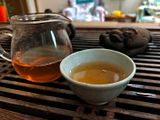
Service à thé en porcelaine et thé vert Long Men Xian 2009 : Maison "Thés de Chine" - 20 boulevard Saint Germain, 75005 Paris (métro Jussieu), tasse à thé en céramique : Compagnie française de l'Orient et de la Chine


Saturday, July 18, 2009

ADDRESSES / PARIS


LA MAISON DES TROIS THES - 33 Rue Gracieuse, 75005 Paris, TEL.0143369384
Maître YU HUI TSENG, (Metro ligne 7, Place Monge)
http://www-rocq.inria.fr/syndex/iwl.html#3t

*

CHAJIN - LA MAISON DU THE VERT JAPONAIS - 24, rue Pasquier, 75008 Paris, 01.53.30.05.24
www.chajin-online.com/
chajin@wanadoo.fr

*

THES DE CHINE - 20 boulevard Saint Germain, 75005 Paris

*

T-CHA, LA MAISON DE THE, SALON DE THE -6 rue du Pont de Lodi, 75006 Paris, 01.43.29.61.31

*

ENDORA- MAISON DE THE - 6 Rue de la Tacherie, Hotel de Ville, 75004 Paris, 0148870298
Lundi-Samedi 12.30-19.30
www.endora.fr

*

JUGETSUDO - SALON DE THE JAPONAIS, Saint-Germain-des-Prés, 95 rue de Seine, 75006 Paris.TEL.01 46 33 94 90

*

LE PALAIS DES THES - 64 rue Vieille du Temple, 75003, /
35 rue de l`Abbé Grégoire, 75006 / 21 rue de l`Annonciation, 75016 Paris
www.palaisdesthes.com/
+
LE PALAIS DES THES - L'Ecole du Thé. Tél. : 01 43 56 90 90

*

MARIAGE FRERES - 30 rue du Bourg-Tibourg, le Marais, 75004
13 rue des Grands-Augustins, Rive Gauche, 75006 / 260 rue du Faubourg Saint-Honore, Etoile 75008 /
www.mariagefreres.com/

*

LA ROUTE DU THE - 14 rue Lacépède, 75005 Paris
5 rue de la Montagne STe-Geneviève, 75005 Paris
http://www.larouteduthe.com/

*

TNATURE - 35 rue de l`Abbe Gregoire, 75006 Paris, 0145488581
www.tnature.com

*

Maison de la culture du Japon à Paris
101 bis, quai Branly 75740 Paris Cedex 15
Tel: 01 44 37 95 00 - Fax : 01 44 37 95 15
Salle de réception, Pavillon de thé et Espace Cuisine (niveau 5)

*

Tuesday, July 14, 2009

PRECISION / CONSCIENCE


KANJI caractère du thè
Le rituel du thè, Kyoto, 1951, photographie de Werner Bischof, extraits du livre:

Gian carlo Calza, Style Japon, Editions Phaidon, Paris 2007

"....le geste lui-même est l'expression d'une valeur spirituelle précise. La cérémonie du thé est le symbole de l'homme qui , en s'élevant au-dessus de l âpre combat pour la survie, prend conscience que chacun de ses actes est une expression de sa propre personne, une prève qu'il approche de son monde idéal ou, au contraire, qu'il régresse vers l'état de bête: elle est aussi le vecteur permettant d'atteindre cette conscience" p.15

*

"...the gesture of its own is an expression of a precise spiritual value. The Tea ceremony is the symbol of the man who, raising above the rough fights for survival, becomes aware that each one of its acts is an expression of its own person, a prouf that approaches to his ideal world or, on the contrary, that he regresses towards the state of animal: it is also the vector allowing to reach this conscience" p.15

Friday, July 10, 2009

Silence


Late at afternoon, the sunlight came in my room, slowly warming
my teapot, my cup, my hands.
I close my eyes visualizing inside me the calm stillness.
Silence and light, my whole Time is Now and Here, a warm nest
waiting for the tea to brew,
longing to see the color, to feel the texture, to breath the odor.
*
Tard dans l`après-midi, le soleil entre dans la chambre en réchauffant lentement
ma théière, ma tasse, mes mains.
Je ferme les yeux tout en visualisant à l'intérieur de moi la calme immobilité.
Le silence et la lumière: mon Temps entière devient Ici et Maintenant, un nid chaleureux,
en attendant que le thé s'infuse
en enviant... d'observer la couleur, sentir la texture, inhaler le parfum.


I bought this oolong-tea in a small market somewhere in Paris, without managing to identify the mark and the origin. A blind date, an experiment. First i take my time to observe the tea leaves. Small, irregular rolled balls and too many stems. Dark and dull green color. I have a bad presentiment, but... The first brew gives me a strong and clear taste that lastes for a long moment. Round notes of lemon flower and fresh lime taste. I feel the "spirit" of the tea, direct and friendly. The second step is more soft and delicate, i feel gardenia`s scent intoxicating my mood. The third brew is like an old memory that fades in the soft breeze...The leaves now are unfolded, i watch their veins, their shape and color, i can imagine their natural state before the treatment, somewhere on a mountain, rain, fog and sunshine....
*
J`ai trouvé cet oolong dans un petit magasin chinois, côté Villette à Paris. Je l'ai acheté sans savoir sa marque ni son origine. Rencontre en aveugle, envie d'expérimenter. Même si l'aspect des feuilles sèches n'est pas assez prometteur(couleur très terne et plusieurs tiges) le résultat de la première infusion est impressionnant, un goût net, puissant et bien prolongé. Des nuances aromatiques de fleur de citronnier et du citron vert très frais et rafraîchissants. Je peux sentir l'esprit du thé, direct et amical. Deuxième appel et le goût apparaît plus doux et délicat, notes florals de gardénia...Troisième appel, des mémoires flétries...
Les feuilles maintenant sont développés, j'observe leurs veines, leur forme, leur couleur. Je les imagine dans leur état naturel avant leur traitemant, a la montagne, inhalant la pluie, les brumes et le soleil....

Thursday, June 11, 2009

Soetsu Yanagi "Artisan et inconnu" - 'la voie du Thé' (extraits et phrases)


"Thé enseigne la nécessité d'aller droit à l'objet, de VOIR DIRECTEMENT. Il s'agit d'une communion directe entre l'oeil et l'objet. Voir directement signifie voir avant de penser -la pensée obscurcit la vision- voir clairement et en profondeur.
......Mais si nous voulons voir bien une chose, nous devons pas seulement la regarder mais aussi l'utiliser bien. Sans usage, il n'y a pas de vision complète, car rien n' accentue la beauté des choses comme leur UTILISATION JUSTE. Les maîtres du Thé appréhentaient la beauté dans l'action. Le Thé n'est pas une appréciation simplement passive du beau. VIVRE la beauté dans notre vie quotidienne est l'authenticité de la Voie du Thé. La beauté germe dans l'utilité et s'enracine profondément dans la vie réelle...La conception de la beauté CONSOMME...
.....La Voie du Thé est à la fois une manière de regarder les objets et un code pour les utiliser. Les vrais adeptes du Thé accordent les objets avec leur vie la plus secrète et les maîtrisent...Utiliser l'objet juste au bon moment et au bon endroit...L'usage le plus efficace revêt une forme définie. Cette forme/voie/code/loi est donc la cristallisation d'une manière d'usage; quand l'objet est REELEMENT utilisé.....
.....Cette voie/loi/rituel du thé exige que nous la servions. Certains peuvent considérer l'obéissance comme une contrainte, mais obéir à une loi c'est s'y conformer; là est l'absolue liberté. La vraie cérémonie du thé est libre et souple dans ses formes...
Le thé est finalement la voie de la discipline personnelle".

Soetsu Yanagi "Artisan et inconnu"-La Voie du Thé, édition L'Asiathèque, 1992

English free version:

"Tea teaches the necessity to go right to the object, to SEE DIRECTLY. It is about a direct communion between the eye and the object. To see directly means to see before thinking because thought darkens the vision, to see clearly and in-depth.

But if we want to see a thing correctly, we should not only look at it but also to use it correctly. Without usage there is no complete vision because nothing accentuates the beauty of the things like their RIGHT USAGE. The tea masters apprehended Beauty through the action. TheTea is not a simply passive appreciation of beautiful. The authenticity of the Way of Tea is to LIVE the beauty in our daily life. Beauty germinates into the utility and take roots deeply into real life...the concept of the consumed beauty...

The Way of Tea is at the same time a manner of looking at the objects and a code to use them. The real adepts of Tea accord the objects with their most secret life and they master them....
To use the right object at the right moment and the right place... The most effective usage accomplish a definite form. This form/Way/Code is thus crystallization of a manner of use, when the object is REALLY used....


Saturday, June 6, 2009

ABDALLAH ZRIKA "Le Maroc dans une théière"


"Mon enfance , telle qu`en elle-même, gît dans la théière...cette théière pourquoi l'a t'on nommé "barrad"? Que rafraîchit-elle en nous et de quel feu se veut-elle l'extincteur?....La théière en elle même ne rend aucun son, mais, inclinée au-dessus de la coupe, en revanche, elle chante. Et le périple de cette parole chantée commence au contact du verre pour finir dans la bouche du buveur. Bien avant que les gens assis autour la ssinnia ne se mettent à parler, la parole de la théière a déjà circulairment chanté dans les verres et c'est alors seulement que, les langues désormais déliées, les mots vont rondement, autour de la ssinia, autour de la terre. Mais peut on vraiment imaginer une parole qui ne soit un cercle. Paroles que transportent les choses et les gens....Pour moi la théière est le symbole inséparable du conte. Un conte qui se dévide, se déroule d'une bouche à l'autre. Un conte sans commenement ni fin, qui ne fait que tourner....Boire le thé, c'est un peu accorder ton âme à l'univers. Et alors toi et lui ne formez plus qu'un....La théière s'élève et donne à boire. C'est bien une relation d'allaitement qui unit le ciel à la terre, un nourrisson à sa mère......l'air qui est dans ma tête se fredonne dans la théière. Et à chaque fois que je sens un vide m'envahir, je soulève bien haut la théière et vide son contenu dans le verre comme dans ma tête même. Le thé, au lieu de descendre dans mon vendre, va droit dans ma tête. Je voudrais que les notes qui montent en moi s'harmonisent avec celles qui rythment la rotation de la terre....pendant que je parle, ma parole s'ecoule comme l'eau, irriguant une certaine sécheraisse. Le barrad/ théière quand à lui asperge de sa parole toutes les bouches.....La théière est un monde. Une fois ouverte, elle réveille odeurs, parfums et couleurs de la terre, le sucre les gens et leur joie, leur parole......"

ABDALLAH ZRIKA "Le Maroc dans une théière"(Petites proses ~ ed.L`Escampett

I give here a FREE translation in English:

"My whole infancy sits into a Teapot….why we called it teapot/“barrad”?…what it refreshes into us….? A teapot, by its proper nature only, doesn't make any sound, but , when it is inclined over a cup, it sings. The periplus of this singing talk starts at the contact with the cup and finishes into the mouth of the drinker….the teapot`s talk has already circularly sung into the cups…

For me, the teapot is the inseparable symbol of the fable. A fable that unfolds and unrolls from mouth to mouth.. A fable without start nor end, that spins…

Drinking tea, is a little bit like according your soul to the universe, you become one…

The teapot raises and irrigates,
it is a relation of nurse/nourishment that unifies heaven with earth…

The air into my head it`s like the air humming into the teapot. And every time that I feel a void invading me, I lift up high the teapot and I empty the content both into the cup and into my proper mind. The tea, instead of descending to the stomach, it goes directly to my mind. I would like that the notes/tones that ascents in me could be harmonized with the notes that give the rhythm to earth`s rotation.

As long as I`m speaking, my talk flows like the water irrigating a certain dryness.

At the same time, the teapot/barrad sprinkles/asperses with its own talk all the mouths…
A teapot is a whole world. When it opens, it awakes odors, perfumes and colors of the earth, the sugar of the people and their joy, their talk…."


ABDALLAH ZRIKA "Maroc into a teapot"(Petites proses ~ ed.L`Escampette)


Monday, December 15, 2008

Form~less~Form, The Tao is like an empty vessel


The Tao is like an empty vessel.
Yet when you use it, you never need to fill it again.
Deep and still, it seems to be
the source of the ten thousand things!
We should blunt our sharp points, and untie the knots of things; we should attemper our brightness, and bring ourselves into agreement with the obscurity of others.

How pure and still the Tao is, as if it would ever so continue!
...It is empty but not depleted...

In concentrating your breath and making it soft,
Can you make it like that of a newborn babe?
In cultivating and cleaning your profound vision,
Can you do it so that you stay without stain?
We shape and fire clay into a vessel;
It is precisely the space within that makes the clay pots so useful.
It is precisely in these empty spaces that makes the room so useful.
Therefore benefit comes from what is there;
Usefulness comes from what is not there.....
.
LAO CHE ~ Tao te king
.
.
La suprême Vertu est comme l`eau...
Conserver plein ce qui va déborder...
Les vases sont faits d'argile, mais c'est grâce à leur Vide
que l'on peut s'en servir....
Regardant on ne le voit pas, on le nomme l'Invisible
Ecoutant, on ne l'entend pas, on le nomme l'Inaudible
Touchant; on ne le sent pas, on le nomme l'Impalpable....
En haut, il n'est pas éclairé; en bas il n'est pas Obscur.
Il est éternel, il est sans nom....
On peut dire qu'il est FORMEsansFORME...
allant à sa rencontre, on ne voit pas sa face
le suivant, on ne voit pas son dos...
......
effacés; comme la glace fondante
simples; comme le bois non travaillé
vides; comme la vallée....
.
LAO TSEU ~Tao te king

Sunday, November 23, 2008


Leaving everything outside
the echoes of your footsteps are fading out
the present is just a melting point
the light is getting softer and softer
the only space that accepts your existence
it`s the space of Peace
peace for the mind and the body
it`s the fragrance and the vapors of the tea
you breath there...
deepening in your own isness...
<<<

tu laisses tout derrière toi
tu restes immobile et silencieux
dans cet espace intérieur
tu respires profondément
l`heure s`attarde....
tu sens la chaleur et les arômes du thé
intramuros
un jardin secret exhale ses parfums au centre de ton centre...
la sérénité de ton pur êtreté....
<<<

Sunday, October 26, 2008


Falling
Diving slowly in this pool
Feeling the world through this calm liquid surface
pacifying inwards
the ritual of serenity
at the still point of a turning world...

Tuesday, October 21, 2008

Tea Bibliography


Tea Bibliography (in progress)

Okakura, Kakuzo 1862-1913) Titre ˜The book of tea / by Kakuzo Okakura ; foreword and afterword by Soshitsu Sen XV Adresse bibliographique Tokyo ; New York : Kodansha International, 1991, c1989

Sen, Sōshitsu 1923-) Titre ˜The œJapanese way of tea : from its origins in China to Sen Rikyū / Sen Sōshitsu XV ; translated by V. Dixon Morris Adresse bibliographique Honolulu : Unversity of Hawai'i Press, c1998

Sen Soshitsu XV (1991a). Tea life, tea mind. New York & Tokyo: John Weatherhill, Inc.

Yi, Sabine Titre ˜Le livre de l'amateur de thé / Sabine Yi, Jacques Jumeau-Lafond, Michel Walsh Adresse bibliographique Paris : R. Laffont, c1990


Blofeld, John Eaton Calthorpe 1913-) Titre Thé et tao : l'art chinois du thé / John Blofeld Adresse bibliographique Paris : A. Michel, c1997

Chen Wei, Le thé, joyau de l'empire du milieu , éditions Quimétao, Paris, 2000, 283 p.

Wind in the pines : classic writings of the way of tea as a Buddhist path / compiled & edited by Dennis Hirota Adresse bibliographique Fremont, Calif. Asian Humanities Press, c1995 GEN.III56912

Torniainen, Minna Auteur. Titre From austere wabi to golden wabi : philosophical and aesthetic aspects of wabi in the Way of Tea / by Minna Torniainen Adresse bibliographique Helsinki : Finnish Oriental Society, 2000 COL.5770(90)

Ueda, Tokunosuke Titre ˜La céramique japonaise : Les principaux centres de fabrication céramique au Japon / avec une préf. relative aux "ceremonies de thé" au Japon et à leur influence par E. Deshayes Adresse bibliographique Paris : E. Leroux, 1895
EE.IX.76

Marquis, F. Titre Du thé, ou, Nouveau traité sur sa culture, sa récolte, sa préparation et ses usages / par F. Marquis, jeune Adresse bibliographique Paris : Nepveu, 1820
Y.IX.70


Lees, William Nassau 1825-1889) Auteur. Titre ˜A œmemorandum written after a tour through the tea districts of eastern Bengal in 1864-65 Adresse bibliographique Calcutta : Printed at the Bengal Secretariat Press, 1866

Fukukita, Yasunosuke 1874-1944) Auteur. Titre Tea cult of Japan [Texte imprimé] : an aesthetic pastime / by Yasunosuke Fukukita Adresse bibliographique [Tokyo] : Board of tourist industry, Japanese government railways, [1934]

Lam, Kam Chuen Auteur. Titre ˜The œway of tea [Texte imprimé] : the sublime art of oriental tea drinking / Lam Kam Chuen with Lam Kai Sin and Lam Tin Yu Adresse bibliographique Hauppauge, N.Y. Barron's Educational Series, 2002 GEN.III.80182

by Robert Fortune ...: ˜A œjourney to the tea-countries of China, including Sung-Lo and the Bohea hills [ ] – London J. Murray 1852– [xvi], 398 p., [3] leaves of plates 17 ill. 23 cm – – MONOGRAPHIE

Evans, John C. Titre Tea in China : the history of China's national drink / John C. Evans Adresse bibliographique New York : Greenwood Press, 1992

Cave, Henry 1854-) Auteur. Titre Golden tips [Texte imprimé] : a description of Ceylon and its great tea industry / by Henry W. Cave ; illustrated from photographs by the author Adresse bibliographique London : S. Low, Marston, 1901

Plutschow, Herbert E. 1939-....) Auteur. Titre Rediscovering Rikyu and the beginnings of the Japanese tea ceremony [Texte imprimé] / Herbert Plutschow Adresse bibliographique Folkestone : Global Oriental, 2003

Graham, Patricia Jane Titre Tea of the sages : the art of sencha / Patricia J. Graham Adresse bibliographique Honolulu : University of Hawaiʿi Press, c1998

Tea in Japan : essays on the history of chanoyu / edited by Paul Varley and Kumakura Isao Adresse bibliographique Honolulu : University of Hawaii Press, 1994, c1989


Guth, Christine 1948-....) Titre Art, tea, and industry : Masuda Takashi and the Mitsui circle / Christine M.E. Guth Adresse bibliographique Princeton, N.J. Princeton University Press, c1993


Hammitzsch, Horst 1909-) Titre Zen in the art of the tea ceremony / Horst Hammitzsch ; translated from the German by Peter Lemesurier Adresse bibliographique Tisbury [Eng.] : Element Books, 1979

Tea pots in pottery and porcelain [Texte imprimé] Adresse bibliographique London : H. M. Stationery office, 1955

Sadler, Arthur Lindsay 1882-1971) Auteur. Titre Chanoyu or the tea philosophy of Japan Adresse bibliographique Honolulu, 1929

Sadler, A. L. Arthur Lindsay b. 1882) Titre Cha-no-yu : the Japanese tea ceremony / by A.L. Sadler Adresse bibliographique Rutland, Vt. C. E. Tuttle Co. 1963, c1962

Rosen, Diana Auteur. Titre Chai [Texte imprimé] : the spice tea of India / Diana Rosen Adresse bibliographique Pownal, Vt. Storey Books, cop. 1999

Ikkyū 1394-1481) Auteur. Titre ˜La œsaveur du Zen [Texte imprimé] : poèmes et sermons d'Ikkyû et de ses disciples / traduits et présentés par Maryse et Masumi Shibata Adresse bibliographique Paris : Albin Michel, 1998 (18-Saint-Amand-Montrond : Impr. Bussière Camedan

Japon, saveurs et sérénité [Texte imprimé] : la cérémonie du thé dans les collections du Musée des arts Idemitsu : [exposition, Paris], 14 février-14 mai 1995, Musée Cernuschi Adresse bibliographique Paris : Paris-musées, 1995 (36-Argenton-sur-Creuse : Impr. de l'Indre)

Gardella, Robert Paul Titre Harvesting mountains : Fujian and the China tea trade, 1757-1937 / Robert Gardella Adresse bibliographique Berkeley : University of California Press, c1994

Montseren, Jean Le thé, Guide de l`amateur, Paris SOLAR, 1999
Handbook of Chinese popular culture / edited by Wu Dingbo and Patrick D. Murphy Adresse bibliographique Westport, Conn. Greenwood Press, 1994

Marquis, F. Titre Du thé, ou, Nouveau traité sur sa culture, sa récolte, sa préparation et ses usages / par F. Marquis, jeune Adresse bibliographique Paris : Nepveu, 1820